
Essential Guide to Ideal Embroidery Design Sizes for Hats T-Shirts and Towels
- earabian
- Aug 23
- 3 min read
Embroidery projects can quickly go from impressive to disappointing if the design size is off. Choosing the right dimensions for your embroidery on hats, t-shirts, and towels affects not only the look but also the stitch quality and durability. For hobbyists and small business embroiderers in North America, understanding these size guidelines helps create professional results that customers and friends will appreciate.
This guide breaks down the best embroidery design sizes for each item type and explains how size impacts stitch quality. Whether you’re customizing a baseball cap, a casual tee, or a cozy towel, these tips will help you get the perfect fit and finish.
Best Embroidery Design Sizes for Hats
Hats have limited space and curved surfaces, so embroidery designs need to be smaller and carefully placed.
Recommended size: 2 to 3 inches wide
Common placement: Front center panel or side panels
Design considerations:
- Keep designs simple and avoid too much detail
- Use fewer stitches to prevent puckering on curved fabric
- Choose fonts and logos that remain clear at small sizes
For example, a 2.5-inch wide monogram on a baseball cap looks sharp and fits well without distorting the fabric. Trying to embroider a 4-inch design on a hat often leads to stretched stitches and fabric warping.
Ideal Embroidery Design Sizes for T-Shirts
T-shirts offer a larger, flatter canvas, allowing for more flexibility in design size.
Recommended size for chest or back: 4 to 8 inches wide
Placement tips:
- Center chest designs usually work well between 5 and 7 inches wide
- Back designs can be larger, up to 8 inches wide or more depending on shirt size
- Sleeve embroidery should be smaller, around 2 to 3 inches wide
Larger designs on t-shirts allow for more detail and color variation. For example, a 6-inch wide logo on the chest balances visibility and stitch quality. Designs wider than 8 inches may require more stabilizer and careful hooping to avoid fabric shifting.

Embroidery on hats requires smaller, simpler designs to maintain stitch quality.
Recommended Embroidery Design Sizes for Towels
Towels have a textured surface that affects how embroidery looks and holds up over time.
Recommended size: 3 to 6 inches wide
Placement:
- Corner or border areas are common spots
- Centered designs on hand towels or bath towels work well within this size range
Design tips:
- Use dense stitching to prevent thread from sinking into the towel loops
- Avoid very small details that can get lost in the texture
- Choose designs with clear outlines and bold shapes
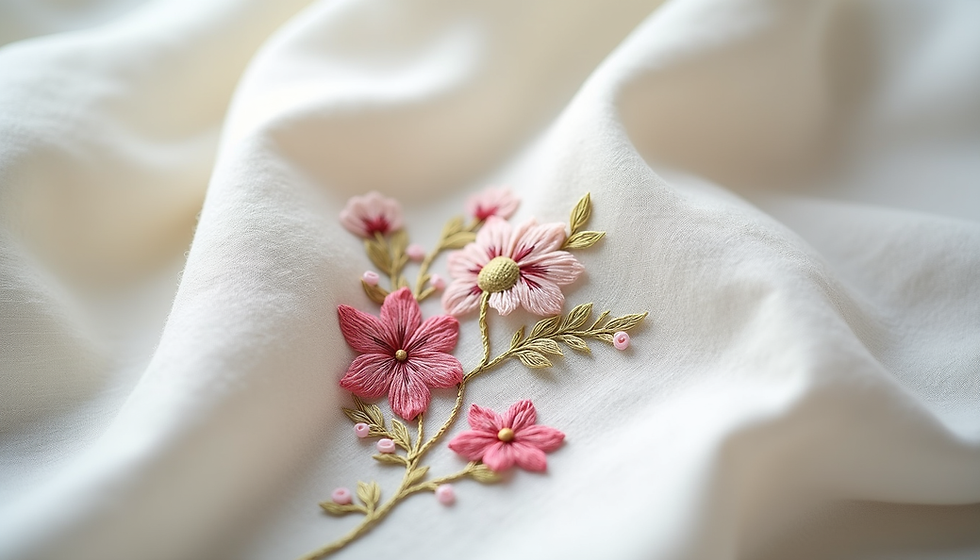
For example, a 4-inch wide floral motif embroidered on a hand towel corner stands out nicely without causing fabric bunching. Larger designs on towels may require extra backing and slower stitching speeds to maintain quality.
How Design Size Affects Stitch Quality
The size of your embroidery design directly impacts stitch density, fabric stability, and overall appearance.
Too large for the item:
- Causes fabric distortion and puckering
- Leads to thread breaks and uneven stitches
- Can make the design look stretched or blurry
Too small for the design details:
- Fine details may disappear or look messy
- Letters and logos become unreadable
- Stitch density may be too high, causing fabric damage
Balanced size:
- Ensures smooth stitching and fabric stability
- Maintains design clarity and sharpness
- Extends the life of the embroidered item
Using the right stabilizer and hooping technique also helps maintain stitch quality regardless of size. For hats, a cut-away stabilizer works best, while t-shirts and towels benefit from tear-away or water-soluble stabilizers depending on fabric weight.
Practical Tips for Choosing Embroidery Design Sizes
Measure the available embroidery area on your item before digitizing or ordering a design.
Test stitch a sample on similar fabric to check size and stitch quality.
Simplify designs for smaller sizes by removing fine details or reducing colors.
Adjust stitch density in your embroidery software to suit fabric type and design size.
Consider the end use: a small logo on a hat needs to be clear at a glance, while a large t-shirt design can afford more complexity.
Embroidery design size matters more than many realize. Matching your design dimensions to the item type ensures your work looks professional and lasts longer. Hats need smaller, simpler designs around 2 to 3 inches wide, t-shirts allow for larger designs up to 8 inches, and towels require moderate sizes with dense stitching to stand out on textured fabric.
By following these size guidelines and testing your designs, you can create embroidery projects that impress every time. Next time you plan a custom embroidery, start by measuring your canvas and choosing the right size for the best stitch quality and visual impact.

Comments